Shared bills go wrong for a predictable reason: everyone thinks the system is obvious. Rent is obvious. Electricity is obvious. The $14.62 that one person put on their card for toilet paper, dish soap, and a replacement mop is where the good vibes go to die.
The fix is not a spreadsheet with more tabs. It is a shared system everyone can see, with a few rules agreed before the first bill arrives.
Agree on the system before the first bill
Moving day is chaotic. That is exactly why it is the right time to write down the boring stuff.
Decide these five things together:
- Who pays the landlord or the utility. One person should own each bill.
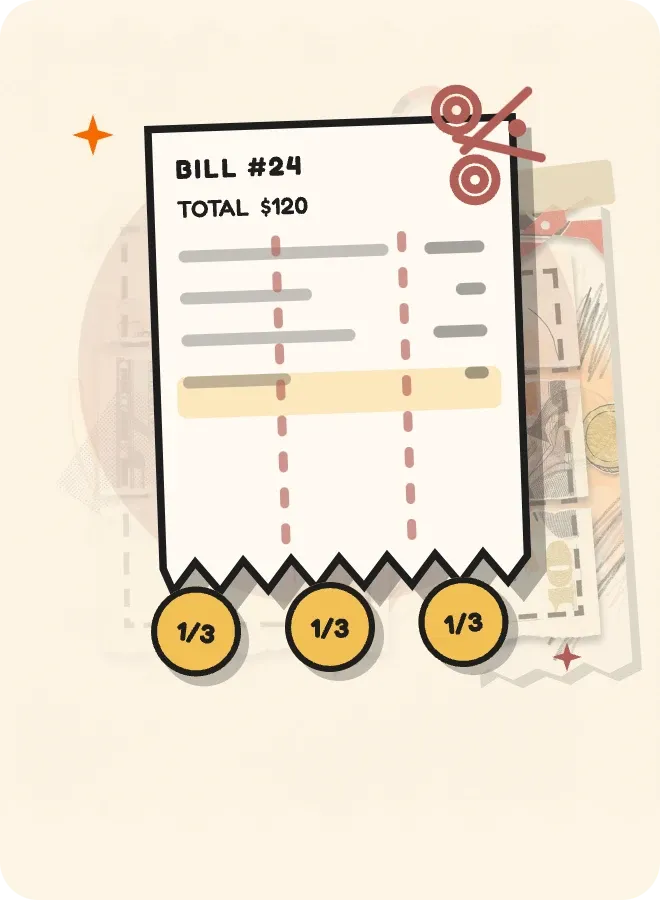
- How the cost is divided. Equal shares are simplest. If one room is bigger, agree on the split now.
- When everyone pays. Pick a date that matches the earliest payday in the flat.
- What counts as a shared expense. Rent, utilities, internet, and cleaning supplies are obvious. A $60 houseplant is not.
- How reminders work. Choose one place for the ledger and one tone for reminders. Nobody should have to guess whether a text is friendly or furious.
Put the answers in the group chat and pin them. A system nobody can find is not a system.
Put every shared cost in one place
The biggest source of roommate resentment is not the amount. It is the memory gap. One person remembers buying the bins. Another remembers paying the water bill. Nobody remembers who still owes what.
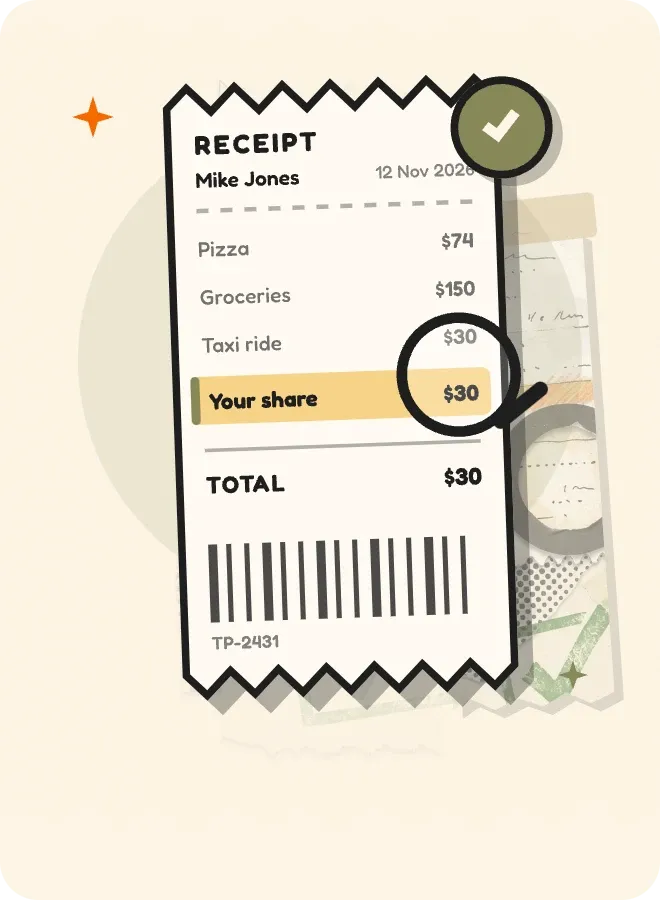
A shared ledger fixes the memory problem. Every shared cost goes in the same place, with four details:
- What it was
- How much it cost
- Who paid
- Who owes a share
If a cost is not shared, it does not go in the ledger. If it is shared, it goes in immediately, not at the end of the month when the receipts are already lost.
Set due dates that match payday
“Pay me when you can” is not a due date. It is an invitation to forget.
Choose a date that works for everyone. If rent is due on the first and everyone gets paid on the last working day of the month, make the transfer date the last working day. If one person gets paid weekly, choose a day that gives them a buffer.
The date does not need to be dramatic. It needs to be the same every month. Predictability is what makes a shared bill feel fair.
Make reminders boring and predictable
A reminder should not be a personality test. It should be the same short message every month, at roughly the same time, with the same information.
Rent and bills are in the ledger. Your share is $812. Please send by Friday. Thanks!
That message is not cold. It is calm. It gives the other person a clear amount and a clear deadline without asking them to interpret your mood.
If someone is late, send one factual follow-up:
Hey, the $812 is still showing as unpaid. Could you send it today or let me know when you can?
If the problem repeats, do not start a group-chat trial. Move the conversation to the system. Maybe the due date does not match their payday. Maybe the split needs to change. Maybe they need a payment plan for one month. Fix the system, not the person.
Handle late payments without a house meeting
A house meeting for every late transfer is exhausting. Use a ladder instead:
- Day 1: a normal reminder.
- Day 3: a direct follow-up.
- Day 7: a conversation about the date or the amount, not about their character.
- Next month: if it happens again, change the due date or the split.
The goal is to make the debt easy to resolve and hard to ignore. Shame is not a payment method.
Review the system once a month
Shared bills change. Someone’s partner moves in. The internet package changes. The electricity bill doubles in winter. A system that was fair in June may be quietly unfair in January.
Spend ten minutes at the start of each month checking three things:
- Is every shared cost in the ledger?
- Is the split still right?
- Is the due date still working for everyone?
Then close the tab. The point of a good system is not to think about it more. It is to think about it less.
Let the ledger carry the memory
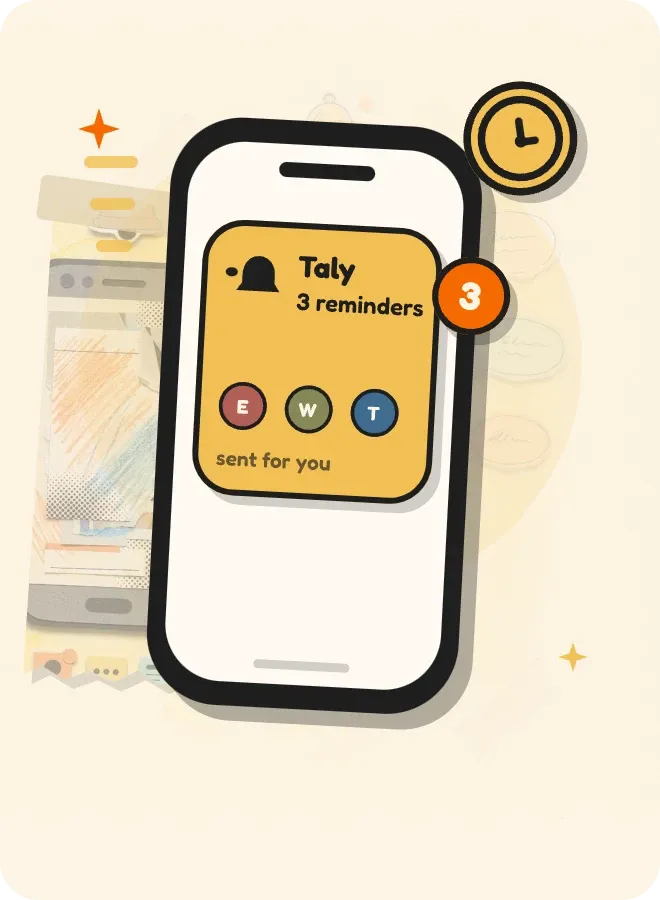
TalyPay keeps the expense, the split, the due date, and the payment details in one shared place. Taly can send the reminder, grouped by person, so the flat does not need a different group chat for every bill. You still agree on the rules. The app just makes sure the rules are visible when the next bill lands.
That is the real win: fewer conversations about who owes what, and more time for the parts of living together that are actually fun.